
The Science of Hot Yoga
The Vitara experience · Seabrook, NH
The Science of
Hot Yoga
In a heated yoga class, your body does two things at once. You practice movement, balance and breath while your body works to stay cool. Researchers study those effects separately to see what the practice builds over time and what the warm room changes in the moment.
The practice
What yoga builds
Holding a pose asks your muscles to support you. Shifting your weight gives you practice balancing, and moving through a comfortable range gives you a chance to develop mobility. In an eight-week trial with 118 older adults, both the Hatha yoga group and a group doing conventional stretching and strengthening improved on measures of balance, flexibility, strength and mobility.
Yoga also gives you a chance to notice your breath and how you respond to effort. In a separate eight-week trial, people who practiced Hatha yoga reported less stress in the moment than those on a waitlist. The study found no change in the daily patterns of the two stress markers it measured in saliva.
Study on yoga and functional fitness · Study on yoga and perceived stress
The heated room
What the heat changes
Your muscles produce heat as you move. In a warm room, your body sends more blood toward the skin and produces sweat. Evaporation helps release that heat. Heart rate and core temperature can rise, and a familiar sequence can feel more demanding. Humidity, class pace and how accustomed you are to the heat all affect how the room feels.
In one small study, experienced students performed the same sequence at about 74°F and 105°F. Several joint movements improved immediately after both sessions. One hip movement improved more in the heated session, and the researchers found no significant difference in calories used. A separate 12-week trial found no clear advantage for heat on its measure of how well a blood vessel widens. Most hot yoga studies have used Bikram-style classes, so findings from those classes do not establish the same effects for every heated format.
NIOSH guide to heat and the body · Single-session comparison · 12-week comparison · Review of hot yoga research
Inside the studio
Why we use infrared heat at Vitara
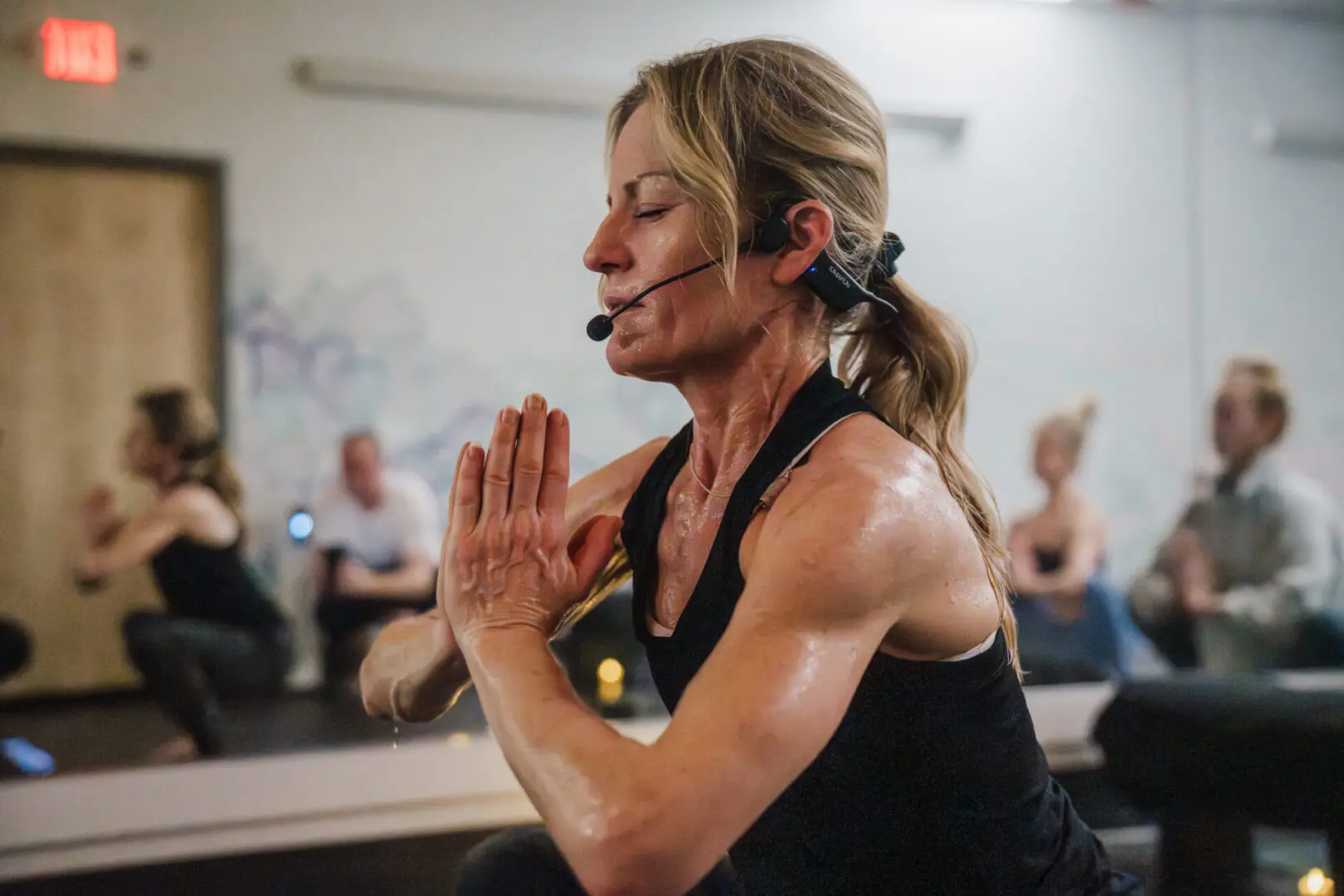
Infrared panels give our Seabrook studio a radiant warmth you can feel as you settle onto your mat. We use that warmth to shape the experience of class, from slower practices to more active sequences. Your teacher guides the pace and offers ways to adapt. You can make a movement smaller, choose a steadier pace or pause when you need to.
Your first visit
Getting comfortable with the heat
Arrive hydrated, bring water and give yourself time to get used to the room. If you feel dizzy, faint or nauseated, or develop a headache, stop, move somewhere cooler and let your teacher know. The American College of Obstetricians and Gynecologists advises avoiding hot yoga during pregnancy because of overheating risk.
CDC guidance on heat illness · ACOG guidance on exercise during pregnancy
New to Vitara?
Try your first class.
Tell your teacher it’s your first visit and ask for a pace that feels comfortable for you.