 Skip to content
The Complete Guide to Infrared Hot Yoga in Seacoast NH
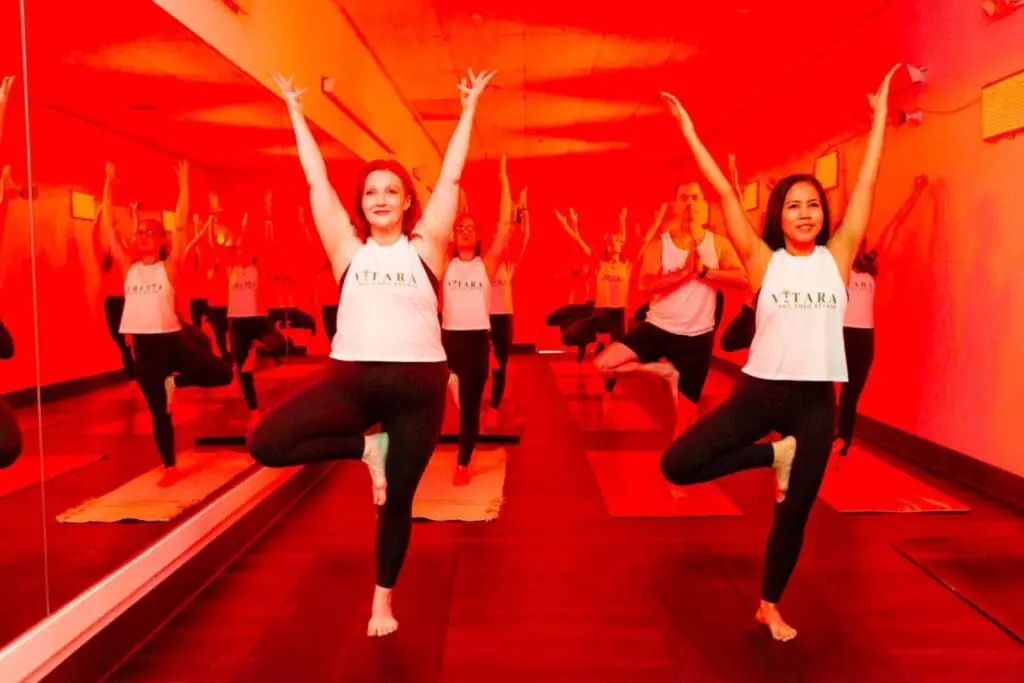
Infrared hot yoga describes a heated studio environment created with infrared panels rather than relying only on warmed air. That equipment is part of the room; it does not replace the teacher, sequence, breathing, or choices that make a yoga class useful.
This guide gives Seacoast students a grounded way to evaluate the experience without promising outcomes that a studio class cannot guarantee. If you are deciding whether to visit, pair it with Vitara’s hot-yoga studio overview and the current class descriptions.
What infrared describes—and what it does not
Infrared is a part of the electromagnetic spectrum used in many heating systems. In a yoga studio, infrared panels contribute radiant warmth that can feel different from a room heated primarily by circulating hot air. Panel placement, room design, class activity, humidity, and your own body all influence the result.
The term does not establish a predictable health outcome. Claims about cleansing the body, treating disease, or producing a particular recovery result go beyond what students should expect from class. A more useful question is whether the room and instruction help you practice attentively at a manageable effort.
How the room may feel
Some students describe radiant warmth as direct or even, while others simply experience a hot room. You may notice warmth before much movement, or the class may feel progressively more demanding as activity and temperature combine. No single description applies to everyone.
Sweating is a normal cooling response, not a performance measure. More sweat does not mean a more successful class. Read What Infrared Heat Feels Like so you know why attention and decision-making matter more than chasing intensity.
What still determines class quality
Heating technology cannot choose an appropriate sequence, observe the room, or offer a useful alternative. Teacher cueing, class structure, room culture, and your freedom to rest remain central. The equipment should support the environment rather than become the entire story.
Choose a format that matches your current experience. A slower class may give you more time to learn the heat, while an athletic class can amplify effort quickly. Use the class descriptions to compare pace before selecting a time.
Prepare for a first infrared class
Drink normally throughout the day, leave enough time after a familiar meal, and arrive early. Tell the teacher you are new to the heated environment. During class, reduce movement or rest before you feel overwhelmed, and do not use another person’s pace as evidence of what you should tolerate.
After class, cool down gradually and note the difference between the room, the sequence, and the teacher. If you want a detailed timeline, read How to Prepare for Your First Infrared Hot Yoga Class before booking.
Related Vitara guides
- Compare infrared and traditional hot yoga
- Learn how infrared heat may feel
- See Vitara’s studio environment
Frequently asked questions
Is infrared hot yoga still hot yoga?
Yes. Expect a heated room and plan to pace yourself. The infrared panels describe part of how the environment is warmed.
Does infrared heat guarantee a specific result?
No. Individual experience varies, and a yoga class should not be presented as a guaranteed solution for a health concern.
Can a beginner try infrared hot yoga?
Yes, when the class choice and pacing are appropriate. Arrive early, tell the teacher you are new, and rest whenever needed.