 Skip to content
From Movement to Stillness: What Happens in Vitara Flow to Nidra
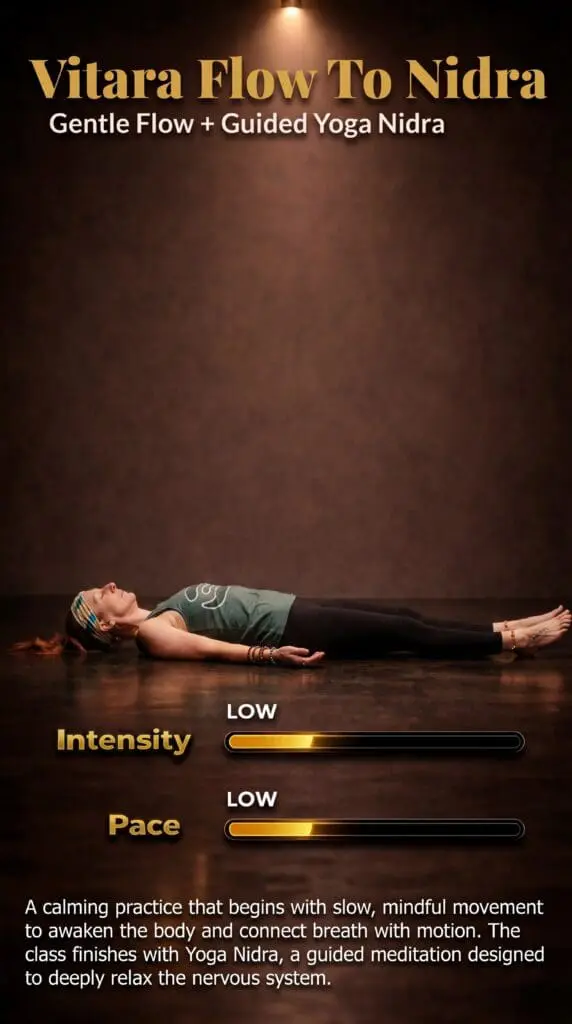
Vitara Flow to Nidra is designed to move you through two distinct experiences in one class: teacher-led physical movement followed by a quieter, guided period of rest. You do not need prior meditation experience, and you do not have to fall asleep. The movement gives your attention something active to follow; the Nidra portion invites you to become still and listen. The exact sequence, pace, and emphasis can vary by teacher.
The first phase: arriving through movement
The flow portion helps you shift from the pace of the day into the pace of the room. A teacher may use breath, familiar standing shapes, transitions, and floor-based movement to create that change. This is not a fixed sequence that every teacher delivers identically. Check the current Vitara class descriptions for the broad format, then let the teacher guide the particular class in front of you.
You are not trying to tire yourself out enough to “earn” rest. Movement and stillness are both the practice. Choose options that allow you to remain present. If a transition is unfamiliar, watch or pause. If you want less intensity, make the movement smaller, lower your knees, or choose a stable position until the next clear cue.
The transition: letting the room become quieter
The shift into Nidra is part of what makes this class different from ending a flow with a brief rest. The teacher will create time for the group to settle. You may be invited to lie on your back, but that is not the only valid position. Side-lying, a supported recline, bent knees, or another comfortable shape may work better for your body.
Set yourself up before the guidance begins. Adjust clothing, move your water where it will not be knocked over, and use any support available to reduce unnecessary effort. Once you are comfortable, the goal is not perfect stillness. Small adjustments are allowed.
The Nidra phase: guided attention rather than performance
Yoga Nidra is often translated as “yogic sleep,” but the class does not require you to sleep. The teacher’s voice may direct attention through the body, breath, sensations, images, or a simple intention. Your experience can vary from one class to another. You may feel deeply settled, mentally busy, drowsy, alert, or somewhere between those states.
If your mind wanders, noticing that it wandered is enough. Return to the teacher’s current words without replaying what you missed. If you fall asleep, you have not failed. If you remain awake, you have not failed. Flow to Nidra offers a structure for rest; it does not promise a particular mental state or a guaranteed night of sleep.
A comfort-first setup tool
| If you notice | Try | Why it may help |
|---|---|---|
| Low-back discomfort lying flat | Bend your knees or support them if an appropriate prop is available | Changes the resting position without abandoning the practice |
| Neck strain | Use a small, appropriate support or choose side-lying | Lets the head rest more naturally |
| Feeling exposed or restless | Choose a place in the room that feels settled and keep eyes softly open if preferred | Gives you more choice in how you receive the guidance |
| Difficulty staying still | Allow quiet adjustments, then return attention to the voice | Removes the pressure to perform stillness |
| Drowsiness | Let it be part of the experience unless you need to stay alert for safety afterward | Nidra is not a concentration contest |
Is this class a good fit today?
Flow to Nidra may fit when you want some movement but do not want the entire class to remain active. It may also appeal if sitting upright for meditation feels demanding or if a quiet class without movement is hard to enter directly.
Choose a different format if you want sustained strength work, a fully active flow, or a class centered primarily on long-held stretches. Vitara offers multiple ways to practice, and the forthcoming guide Which Vitara Class Fits How You Want to Feel Today? can help you compare them without ranking one above another.
After class: leave yourself a little transition time
A longer rest can make the return to conversation, screens, or driving feel abrupt. Sit up at your own pace and make sure you feel alert before leaving. Drink normally, gather your belongings carefully, and notice the experience without demanding a verdict.
A useful reflection is simple: Did I like moving before resting? Was the amount of guidance comfortable? Did I prefer lying down or another position? Those answers help you decide whether to repeat the class, try Yin, explore Power to Yin, or choose a more active format next.
Frequently asked questions
Do I need experience with meditation?
No. The teacher provides verbal guidance, and there is no requirement to hold your attention perfectly. You can simply listen and return when your mind wanders.
What if I cannot lie on my back comfortably?
Choose another resting position and ask the teacher about suitable support before class. Side-lying, bent knees, or a supported recline may be more comfortable for some people.
Is Flow to Nidra the same as Yin?
No. Yin generally centers on quieter, longer-held physical shapes. Flow to Nidra includes an active movement phase and then a guided resting practice. The lived pace may vary by teacher.