 Skip to content
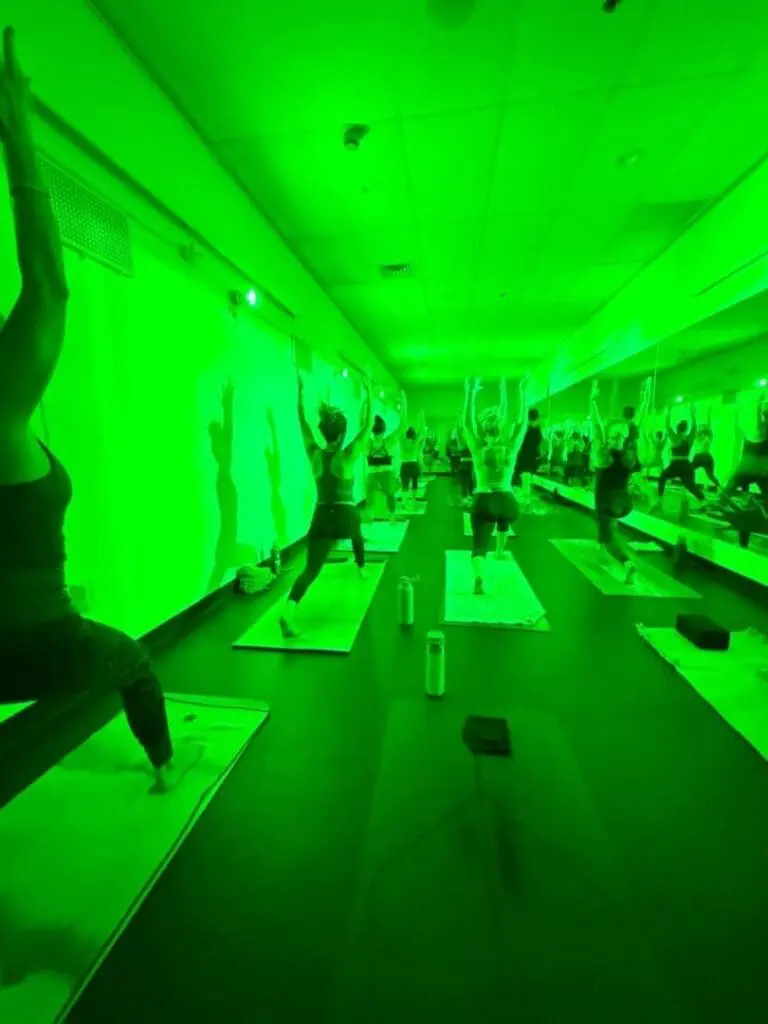
Red Light Yoga vs Green Light Yoga
Red and green lighting can make a yoga room feel visually distinct, but color does not tell you the pace, physical demand, or quality of instruction. At Vitara, the useful way to understand light is as one part of the studio atmosphere alongside heat, music, sequencing, and teacher presence.
This comparison keeps the experience grounded. It does not present ambient color as a medical treatment or guarantee a physical outcome. Choose the yoga class first, then decide whether the visual environment sounds appealing.
What changes when the room changes color
Colored light changes contrast, visual warmth, and the overall mood of a space. Red can read as warm or dramatic; green can read as cool or grounded. Those associations are subjective and shaped by brightness, music, time of day, and personal preference.
The lighting does not change the basic expectations of class. You still listen to the teacher, choose your range, take breaks, and stay aware of the heated environment. A color should never be used as a reason to ignore discomfort or assume you will respond in a particular way.
Choose format before color
If you want a slower flow, a quiet Yin class, a Power-to-Yin blend, or a stronger athletic format, start there. The class description tells you more about physical demand than the light setting.
Then check the live schedule or ask the studio which lighting is planned. Programming can change, and not every class necessarily uses the same environment. Current information is more reliable than an old photo or social post.
Use sensory preference as real information
Some students enjoy immersive colored light because it makes the room feel separate from the rest of the day. Others prefer more neutral light or need to know about brightness and visual changes before entering. Neither response is more evolved or more committed.
If light sensitivity, visual access, headaches, or another concern affects you, contact the studio before booking and decide based on current conditions. You can also position yourself where seeing the teacher feels easiest, subject to room guidance.
Evaluate the complete class
After class, separate the atmosphere from the sequence. Did the color support your focus? Was the brightness comfortable? Did the teacher’s cues make sense? Did the heat and pace fit today? Those answers will help you choose more accurately than deciding whether one color is universally better.
Read What to Expect in a Light-Enhanced Yoga Class for a first-visit timeline and How Light, Heat, and Breath Shape the Vitara Experience for the interaction among room elements.
Related Vitara guides
Frequently asked questions
Is red or green light a different style of yoga?
No. The lighting is part of the room environment. The scheduled class format determines the main movement and pacing.
Does one color provide a predictable health result?
No. Vitara describes the light as atmosphere, not a promise to diagnose, treat, or change a health condition.
Can beginners attend a light-enhanced class?
Yes, if the class format fits their experience and the visual environment is comfortable. Read the description and arrive early.