 Skip to content
Vitara Yin: What to Expect
Vitara Yin slows the pace and spends more time in seated or lying shapes, often with props and fewer transitions than a flowing class. Stillness does not mean nothing is happening. You are organizing support, noticing sensation, deciding how long to remain, and practicing the choice to use less.
This is the primary Vitara resource for Yin class intent. It replaces an older article built around unsupported healing language and focuses instead on what students can actually expect in the room.
The structure of a Yin class
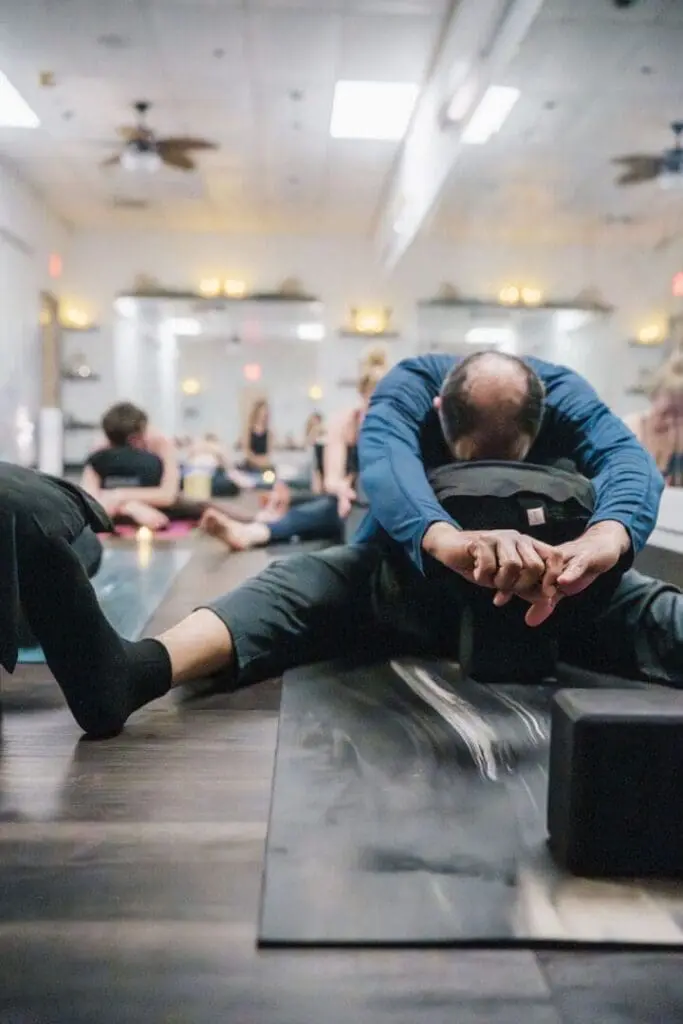
The teacher introduces a shape, explains setup options, and gives the room time to settle. You may remain for several minutes before transitioning slowly to another position or a brief neutral pause. Exact shapes and timing vary, so current teacher guidance matters more than memorizing a fixed sequence.
Because transitions are less frequent, set up carefully at the beginning. Gather props within reach, arrange clothing, and ask questions before the hold becomes quiet. You can still move at any time; stillness is an invitation, not a rule that cancels discomfort.
Use props to change the relationship to the pose
A block can support a hand or knee, a bolster can receive body weight, and a blanket can soften contact with the floor. Props do more than make a pose easier. They can change effort, angle, pressure, and the amount of attention required to remain.
Choose enough support that your breathing stays ordinary and you can leave without feeling trapped. Read Hot Yoga for People Who Are Not Flexible if you tend to interpret support as a lesser option.
Distinguish useful sensation from a reason to stop
Yin is sometimes described with language about finding an edge. A safer interpretation is a position that produces noticeable but manageable sensation while leaving room to make a calm choice. Sensation may change over time; you do not need to deepen when it decreases or stay when it increases.
Back out for sharp, pinching, electrical, numb, unstable, or joint-centered discomfort. Move slowly after a longer hold and pause before standing. The ability to leave at the right moment is part of the practice.
Prepare for quiet as well as movement
Wear clothing that remains comfortable while still and consider a light layer if you tend to cool down. Bring or confirm access to props you rely on. Arrive early and tell the teacher about a movement limitation you want help accommodating.
Mentally, expect fewer distractions. Thoughts may feel louder when movement slows, and that does not mean the class is going badly. Adjust your gaze, position, or support as needed. If you want an active beginning before stillness, read What Is Power to Yin? and compare the current schedule.
Related Vitara guides
Frequently asked questions
Do I need to be flexible for Yin?
No. Use props and angles that fit your current range. Flexibility is not an admission requirement or the only measure of practice.
Is Yin a recovery day?
It can feel quieter, but longer-held sensation may still be demanding. Decide based on your body and the actual class rather than treating Yin as automatic rest.
Can I move during a hold?
Yes. Adjust, add support, reduce range, or leave the shape whenever you need to. Stillness is never a requirement to ignore concerning sensation.