

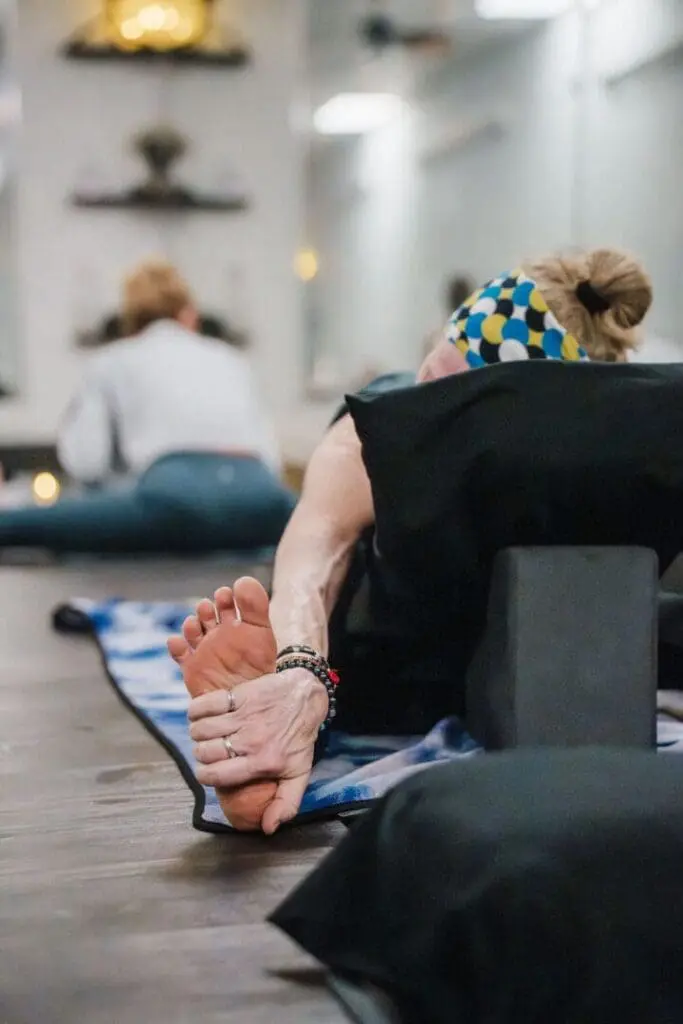
Yoga for Seacoast Runners: Mobility Without the “Perfect Stretch”
Runners do not need a perfect stretch, a certain toe-touch, or a dramatic pose to make mobility work useful. A better goal is to notice how you feel after today’s miles and choose movements that give you room to breathe without forcing range. For Seacoast runners, that may mean a short reset at home, a slower yoga class after an easy run, or complete rest after a demanding day. The useful choice changes with your training, the weather, and your energy.
Runners need choices, not a perfect range
A run repeats a relatively small set of motions many times. Yoga can offer a different menu: side bending, rotation, balance, supported rest, and slower transitions. That variety may feel refreshing, but more range is not automatically better. Your most useful version of a pose is the one you can control while breathing normally.
Two runners can finish the same route and need different things. One may want quiet floor-based movement. Another may feel ready for a steady, strength-focused class. Your stride, training history, sleep, stress, and previous injuries all affect the decision. Treat the first few minutes as information gathering rather than proof of what your body should do.
Use this five-point runner self-check
Before stretching or booking a class, take one minute to scan five areas. You are not diagnosing a problem. You are deciding how much movement sounds reasonable today.
| Check | Question | Useful response |
|---|---|---|
| Breath | Has my breathing returned to an easy rhythm? | Wait and cool down if you are still working hard. |
| Energy | Do I feel steady, flat, or depleted? | Choose movement, a slower class, or rest accordingly. |
| Symmetry | Does one side feel notably different? | Use a smaller range and avoid forcing the tighter side to match. |
| Sensation | Is this ordinary effort or sharp, sudden, or worsening discomfort? | Stop on warning sensations rather than stretching through them. |
| Heat load | Was the run hot, long, or unusually sweaty? | Prioritize cooling, fluids, and recovery before adding a hot room. |
Try a short post-run mobility sequence
Use this sequence after you have cooled down and feel steady. Move slowly, keep each position conversational, and skip anything that does not feel right.
- Supported calf shift: Place your hands on a wall, step one foot back, and gently shift weight until you notice the back lower leg. Keep the heel light or grounded—whichever feels steadier.
- Half-kneeling hip shift: Pad the back knee, bring the front foot forward, and make a small forward-and-back motion. Stay tall enough to breathe without bracing.
- Figure-four option: Sit in a chair and cross one ankle over the opposite thigh, or lie down and make the same shape. Choose the version that lets your jaw and shoulders soften.
- Low lunge to hamstring glide: From a padded kneeling position, move between a small lunge and a gentle hips-back shape. This is a glide, not a maximum hold.
- Reclined twist: Lie down, let bent knees move a comfortable distance to one side, and keep the twist smaller if your back asks for less.
- Quiet reset: Rest with feet on the floor or lower legs on a chair and notice whether your breathing and overall effort have settled.
Let the run choose the class
After an easy run, you may enjoy a moderate class if your energy feels stable. After hills, speed work, a long run, or a hot outdoor session, Yin or another slower option may better match the day. Vitara’s class descriptions let you compare pace and emphasis before deciding.
A simple rule is to avoid stacking two demanding sessions merely because both fit on the calendar. Training plans look tidy on paper; bodies respond in real time. If you enter class, tell the teacher you ran that day and choose options that leave you feeling in charge of your effort.
When to pause and get help
Stop if movement brings sharp pain, sudden instability, numbness, or symptoms that worsen as you continue. The National Center for Complementary and Integrative Health notes that yoga injuries can occur and recommends qualified instruction, especially when you are new or managing a health condition or prior injury.
Heat deserves separate attention. The CDC advises people who feel faint or weak during activity to stop and move to a cool place. Confusion, loss of consciousness, seizures, or very high body temperature are emergency warning signs; call 911. When in doubt, skip the hot room and seek appropriate care.
Make mobility part of the training conversation
The best routine is not the longest one. It is the one that helps you notice what today’s run asked of you. Keep brief notes for two weeks: run type, energy before mobility, movements chosen, and how you felt afterward. Patterns are more useful than one unusually flexible or stiff day.
When you are ready for teacher-led movement, check the live Vitara schedule and choose a class that complements—not competes with—your run.
Frequently asked questions
Should runners stretch immediately after every run?
You do not need to force a long stretch routine after every run. Cool down first, check your energy and symptoms, and choose a short mobility reset, a longer practice, or rest based on the day.
Is Yin always the best yoga class for runners?
No. Yin can suit a slower day, but some runners prefer controlled strength or balanced movement. Match the class to your current training load and energy rather than your identity as a runner.
Can yoga replace a running warm-up?
A general yoga practice and a run-specific warm-up serve different purposes. Keep the preparation your running plan or qualified coach recommends, and treat yoga as a complementary practice.