 Skip to content
How Light, Heat, and Breath Shape the Vitara Experience
A Vitara class is not one feature at a time. Light affects what you see, heat changes perceived effort, breath provides moment-to-moment information, and the teacher organizes movement through the room. Your own choices connect those elements.
Understanding the layers helps you evaluate the experience without treating atmosphere as a guarantee. The room can support attention, but it cannot make every class or every day feel the same.
Light sets a visual context
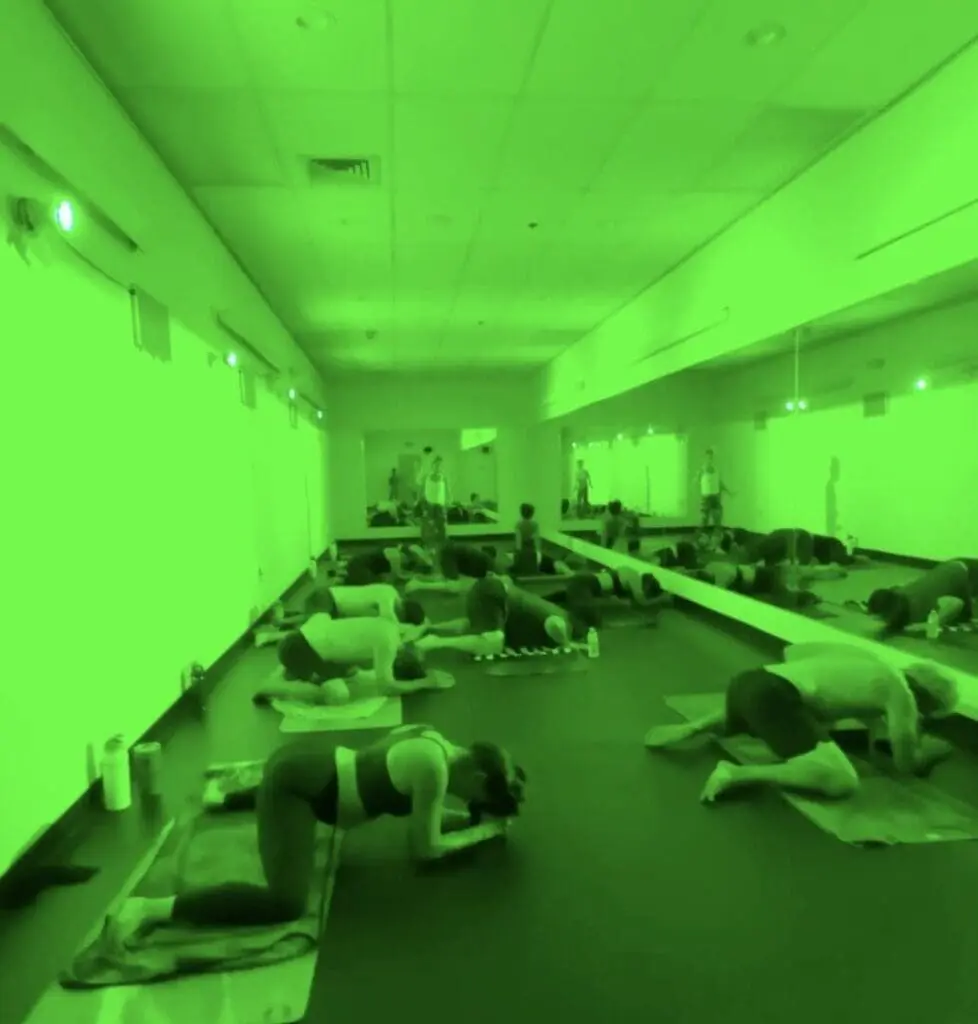
Colored light can make the studio feel separate from daily surroundings and can change how clearly edges and demonstrations appear. Some students find that immersive; others need more visual orientation. Neither reaction predicts commitment or success.
When you enter, let your eyes adjust and choose a clear line of sight. The light-enhanced class guide covers practical setup and sensory questions in detail.
Heat changes the cost of movement
A familiar lunge or flow may feel more demanding in a hot room because your body is also managing heat. Pace that would be ordinary elsewhere may require more breaks. That does not make the room better or worse; it means context matters.
Sweat is only one response. Pay attention to coordination, breathing, clarity, and whether rest helps. Vitara’s infrared heat experience guide explains the arc from entry to cooling down.
Breath is a live feedback channel
Teachers may cue breath with movement, but bodies do not all follow one perfect cadence. Use the cue as structure while noticing whether you are gasping, bracing, or holding your breath to keep up. Simplifying the movement can restore a more workable rhythm.
Do not force unusually deep or rapid breathing because the room feels intense. Ordinary breathing, a stable rest, and clear communication are valid. If breath does not settle or you feel unwell, stop and alert the teacher.
Bring the layers together without chasing an effect
During class, use a simple order: orient to the room, listen for the movement, notice effort, and choose your response. This keeps light and heat in their proper roles—as conditions around the practice—while making attention and agency central.
After class, identify which layer shaped your visit. A different format from the class descriptions, another time from the live schedule, or a simple conversation with the teacher may improve the next experience more than searching for an ideal combination.
Related Vitara guides
Frequently asked questions
Which matters more: light, heat, or breath?
They have different roles. Class format and instruction organize the practice; light and heat shape the environment; breath offers personal feedback.
Should I match every breath cue exactly?
Use cues as guidance, but do not strain or hold your breath to keep pace. Modify or rest when breathing stops feeling workable.
Can I prefer one room atmosphere?
Yes. Sensory preference is useful information. Choose the setting and class that help you participate clearly without claiming it is best for everyone.