 Skip to content
What Is Power to Yin?
Power to Yin combines two different modes of practice in one class. The first portion uses active, breath-led movement; the second slows into longer-held floor shapes with more stillness and support. The transition is the point, not an intermission between a real workout and a passive finish.
This format can appeal when you want both movement and quiet without booking two separate classes. It can also teach you how effort feels as it settles, which is different from staying at one intensity throughout.
The Power portion builds movement and heat
The active portion may include standing sequences, balances, planks, and flowing transitions. Exact content varies by teacher. Use the same principles as any Power class: choose a stable range, modify transitions, and rest before the room becomes overwhelming.
Do not spend all your energy trying to earn the Yin portion. The class is designed as one arc. Practicing the first section below your maximum can make the transition clearer and the second section more comfortable.
The transition is an active skill
When movement slows, heart rate and breathing do not change instantly. Move deliberately toward the floor, gather props, and allow a few ordinary breaths before interpreting new sensations. Sweat can make you feel cool in stillness even when the room remains warm, so keep a towel or light layer available if appropriate.
Mentally, the shift can feel relieving or unexpectedly difficult. Some people prefer motion because stillness makes sensation and thought more noticeable. You are not doing the second half incorrectly if it takes time to settle.
The Yin portion uses time, support, and choice
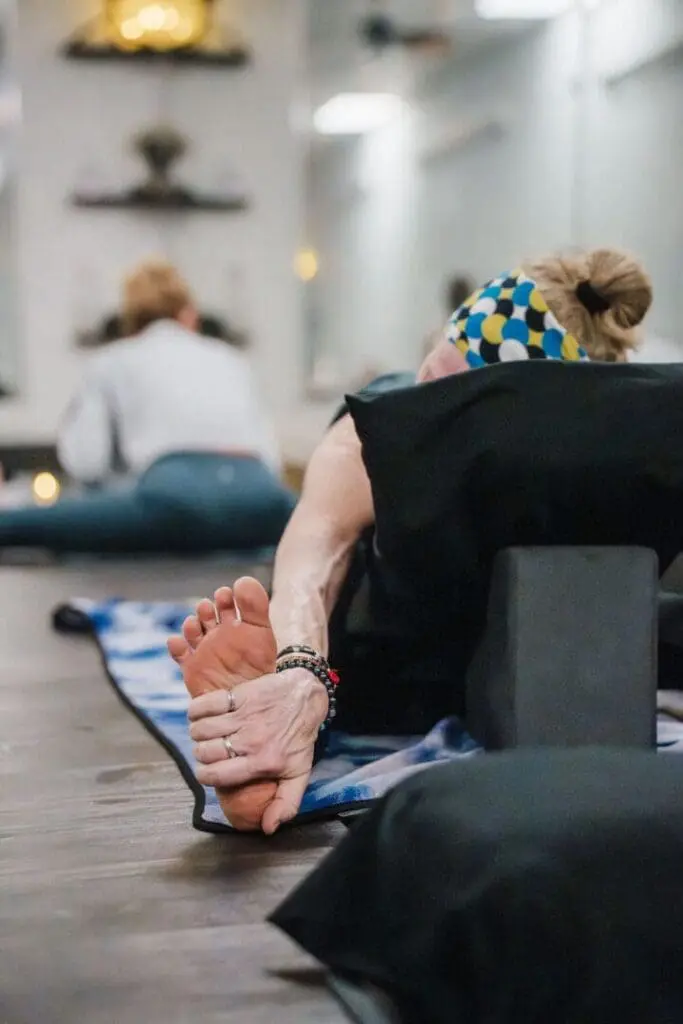
Yin often uses seated or lying shapes held longer than poses in a flowing sequence. Blocks, bolsters, blankets, or changes in angle can reduce strain and make stillness more workable. Aim for sustainable sensation rather than the deepest visible position.
Read Vitara Yin: What to Expect for detailed guidance on props, sensation, and leaving a shape. A Power-to-Yin class introduces those principles in a shorter second portion.
Decide whether the blend fits
Power to Yin may fit if choosing between active and quiet feels difficult, if you appreciate a structured downshift, or if you want to sample elements of both formats. It may not fit when you want a full-length athletic flow or an entire class devoted to supported stillness.
Compare all options on the class descriptions page and check the live schedule. One visit will tell you more about the ratio, teacher, and room than the name alone.
Related Vitara guides
Frequently asked questions
Is Power to Yin beginner-friendly?
It can be, especially for students comfortable modifying the active portion. Tell the teacher you are new and choose less intensity before you need a break.
Do I need to bring special props?
Check current studio information for available props. If you depend on a particular support, bringing your own can make the Yin portion more predictable.
Is Power to Yin the same as taking Power and Yin separately?
No. It offers elements of both in one class, with less time devoted to each than two full classes and a deliberate transition between them.